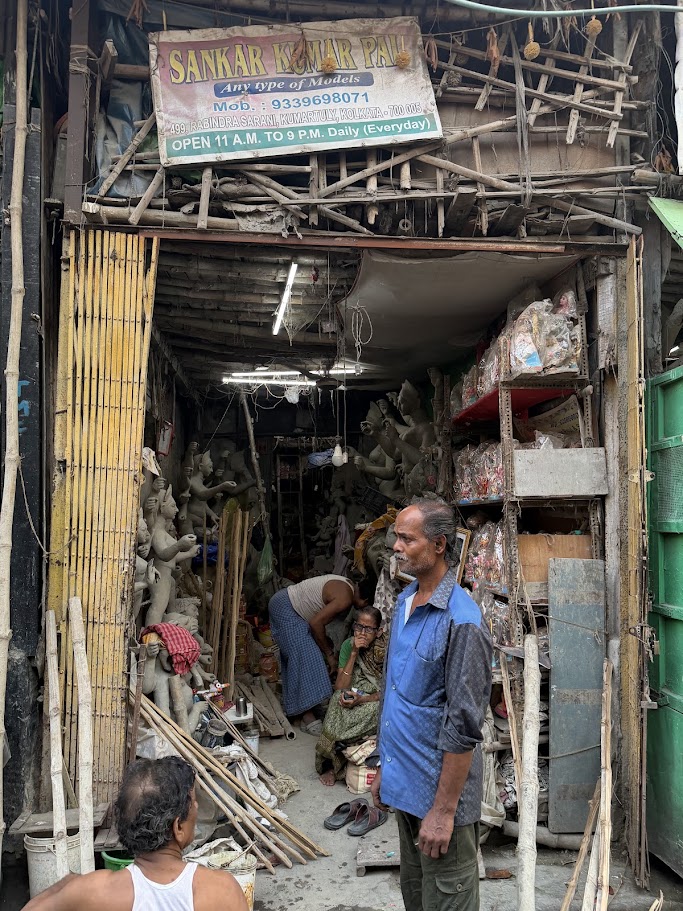
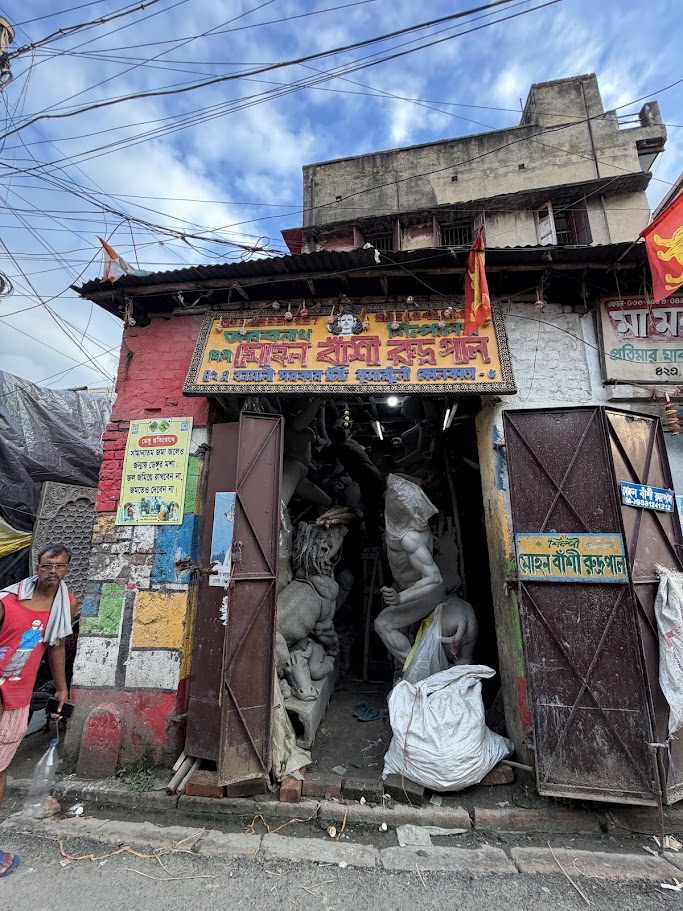
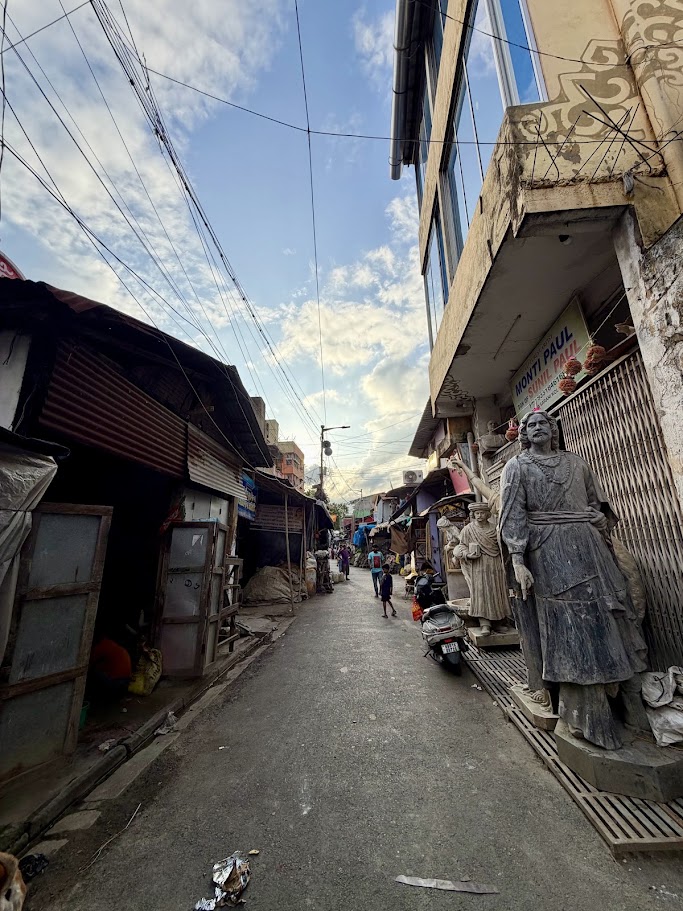
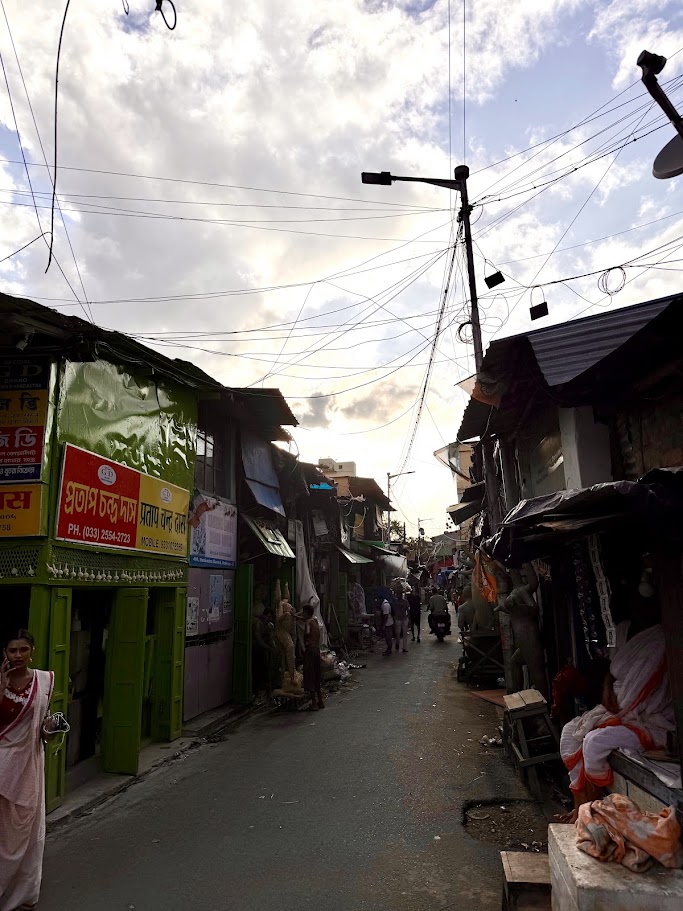
One of the most unforgettable experiences during my time in Kolkata was a visit to Kumartuli, a remarkable artisan colony tucked away near Banamali Sarkar Street and Rabindra Sarani. Stepping into this 300-year-old neighborhood felt like entering a living museum, where tradition, creativity, and devotion come together in extraordinary ways.
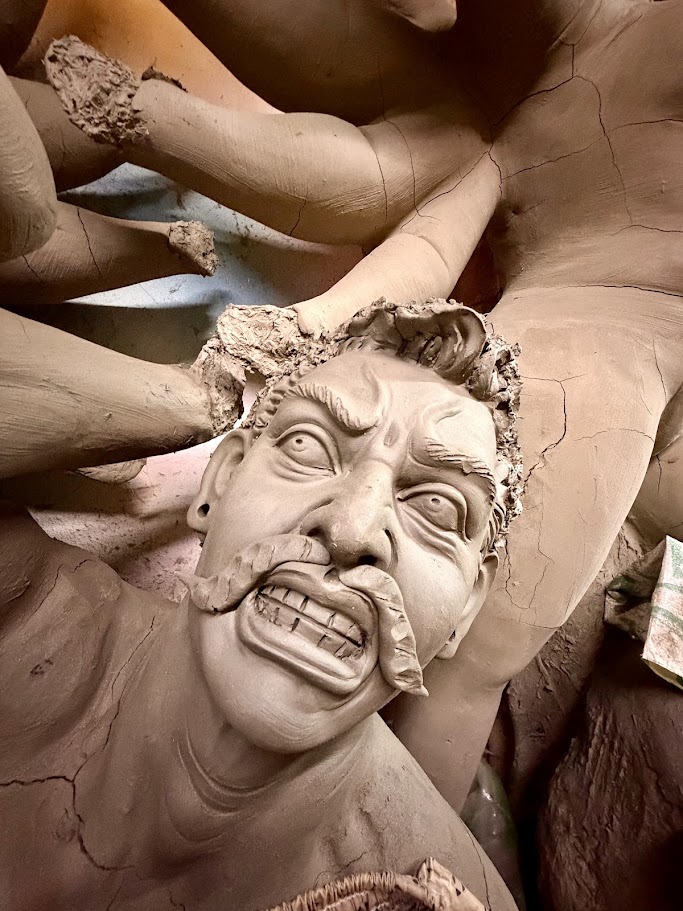
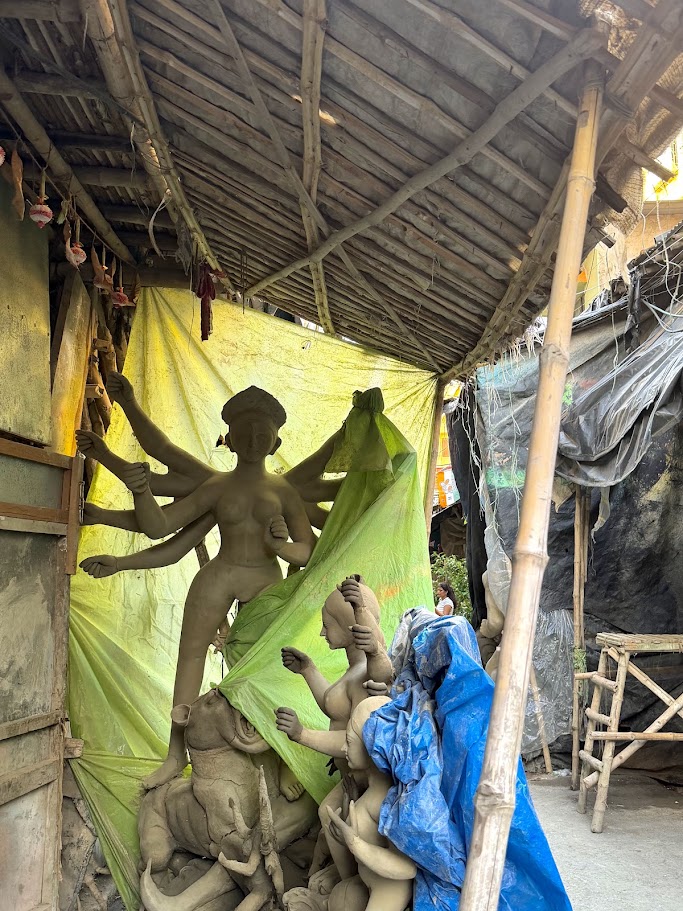
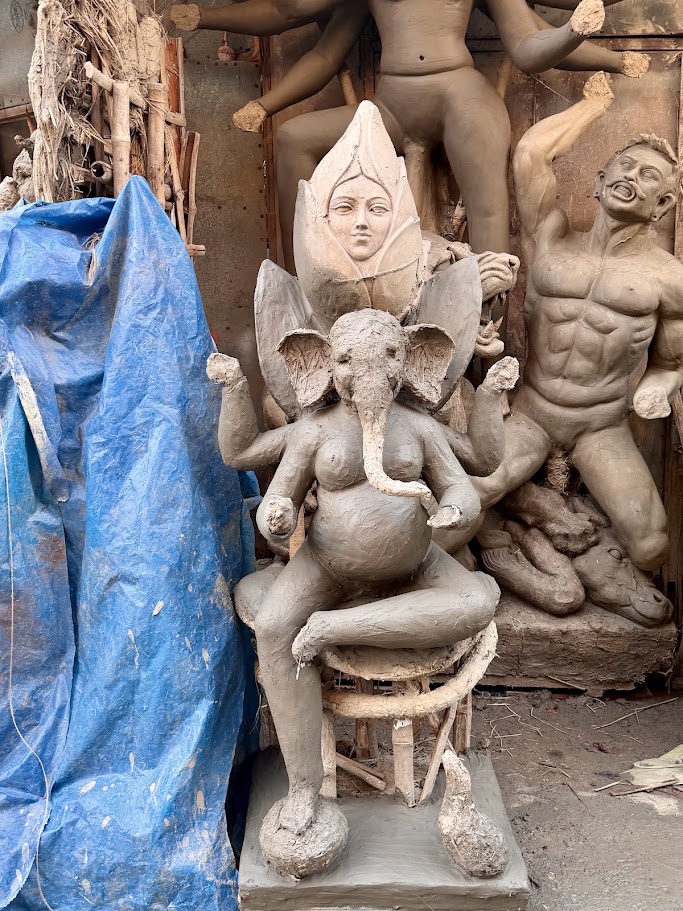
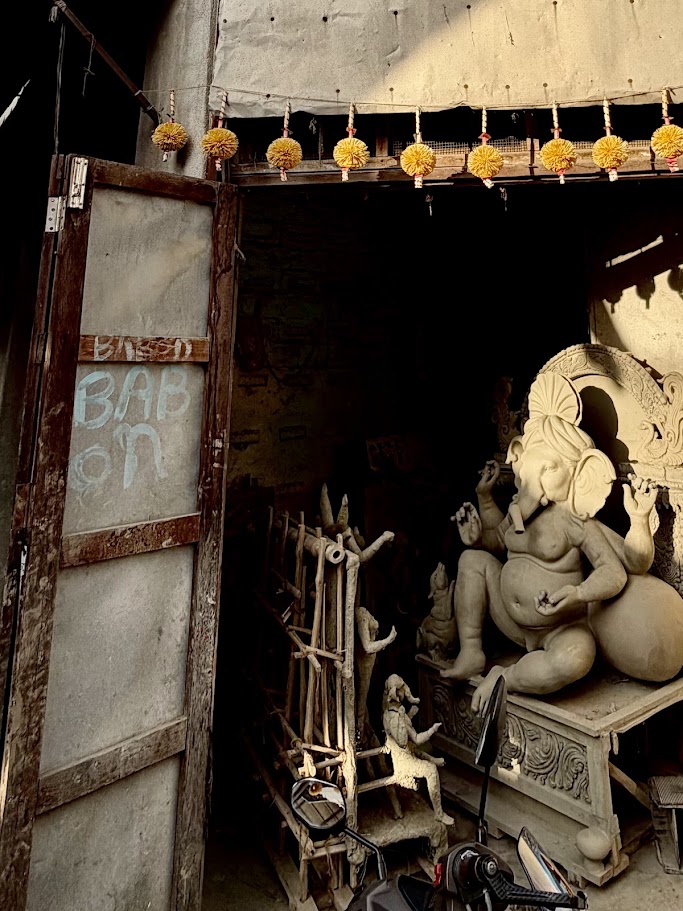
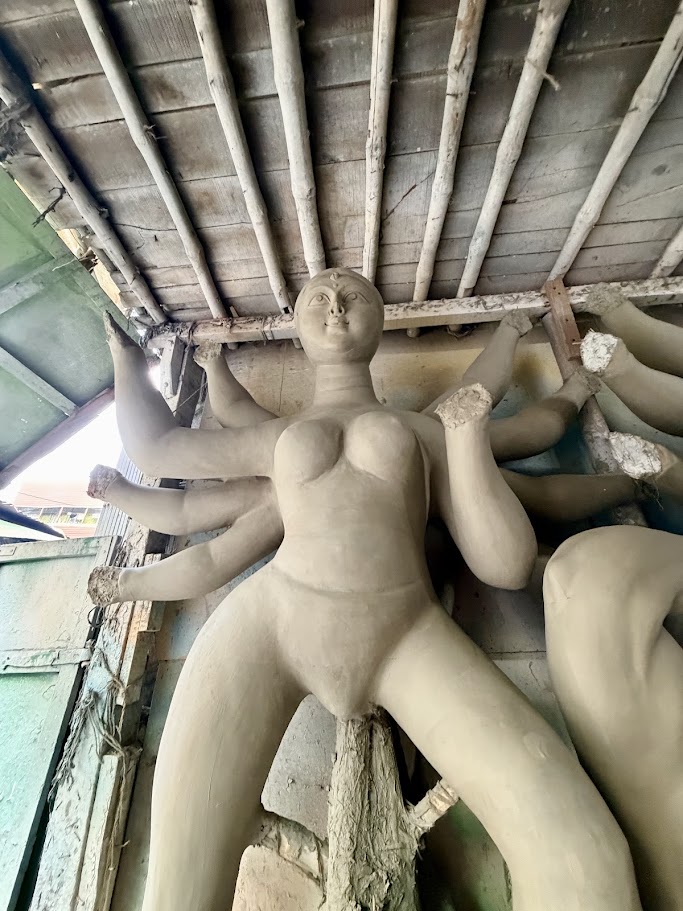
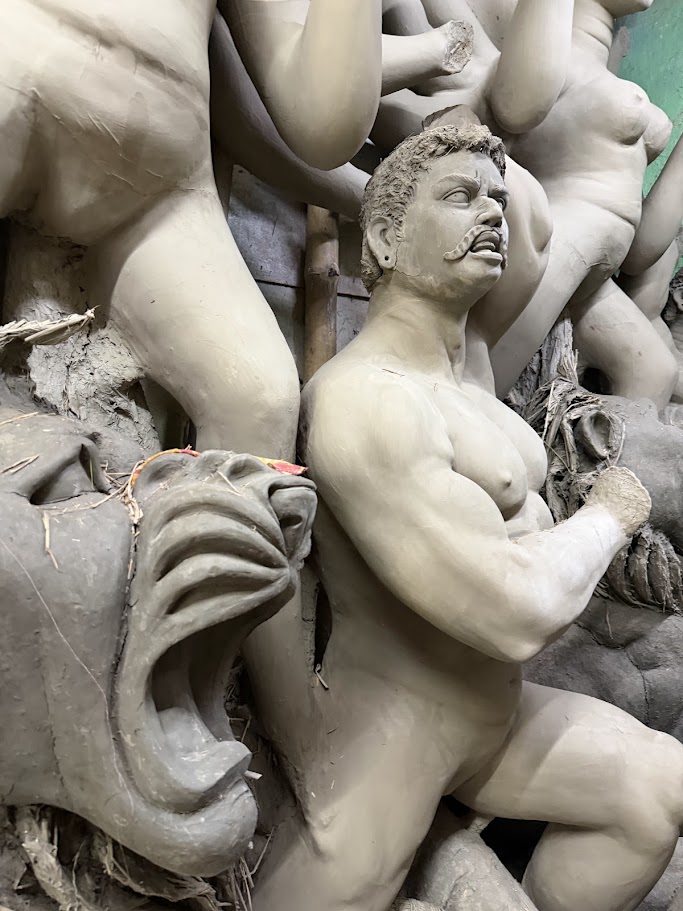
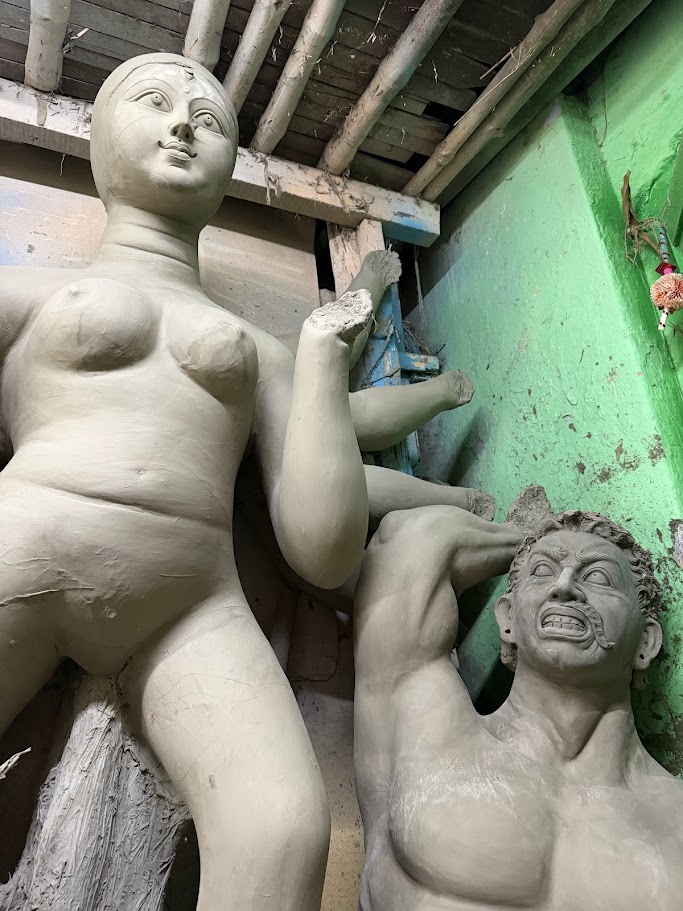
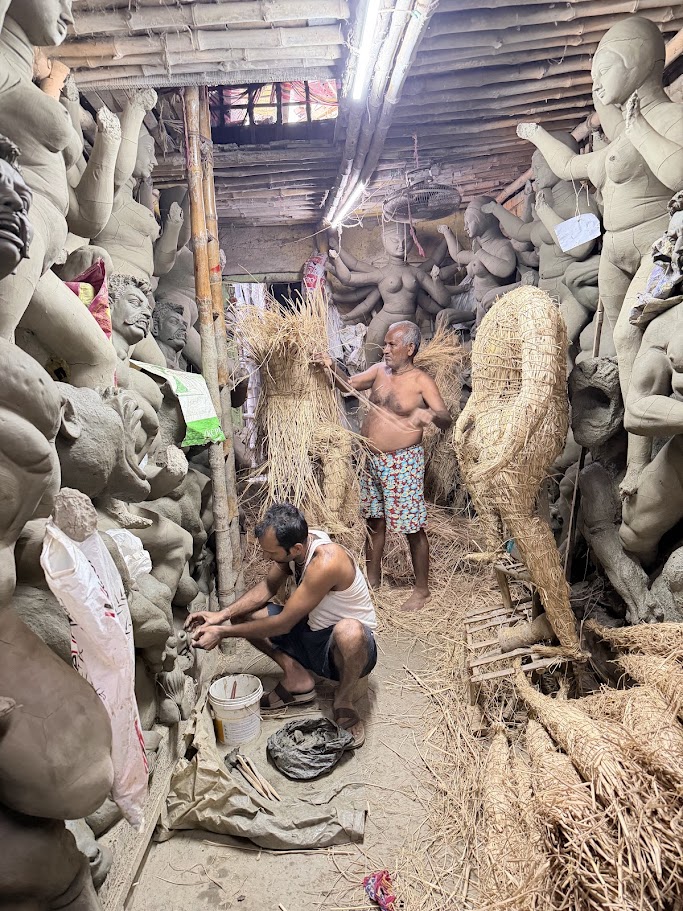
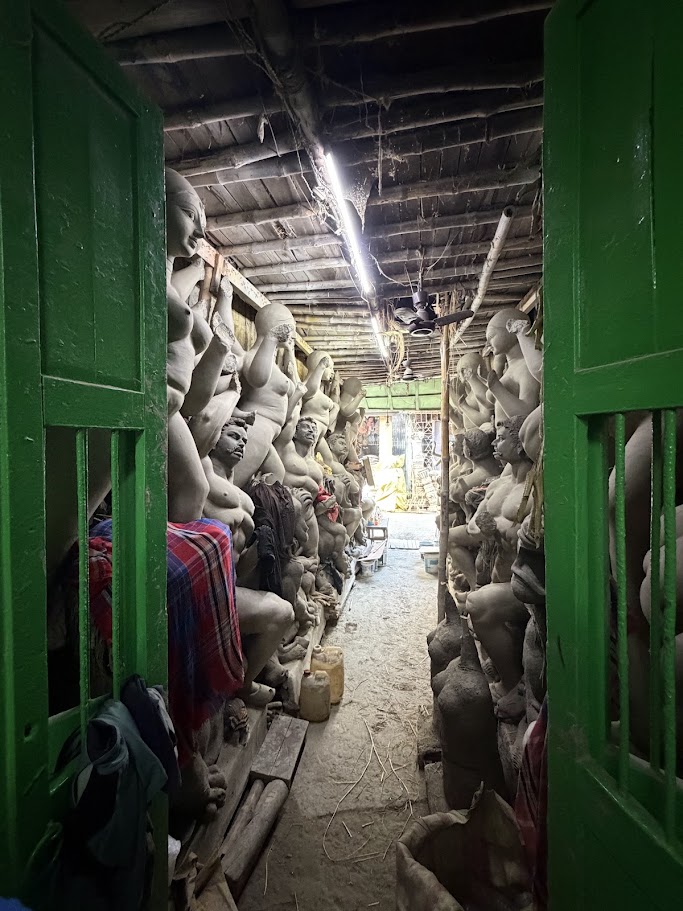
Kumartuli is renowned as the place where master craftsmen create the breathtaking idols used in Durga Puja and many of India’s major religious festivals. As I wandered through its narrow lanes, I was surrounded by towering figures in various stages of completion. Some were little more than straw frameworks, while others were nearly finished masterpieces with expressive faces and intricate details.
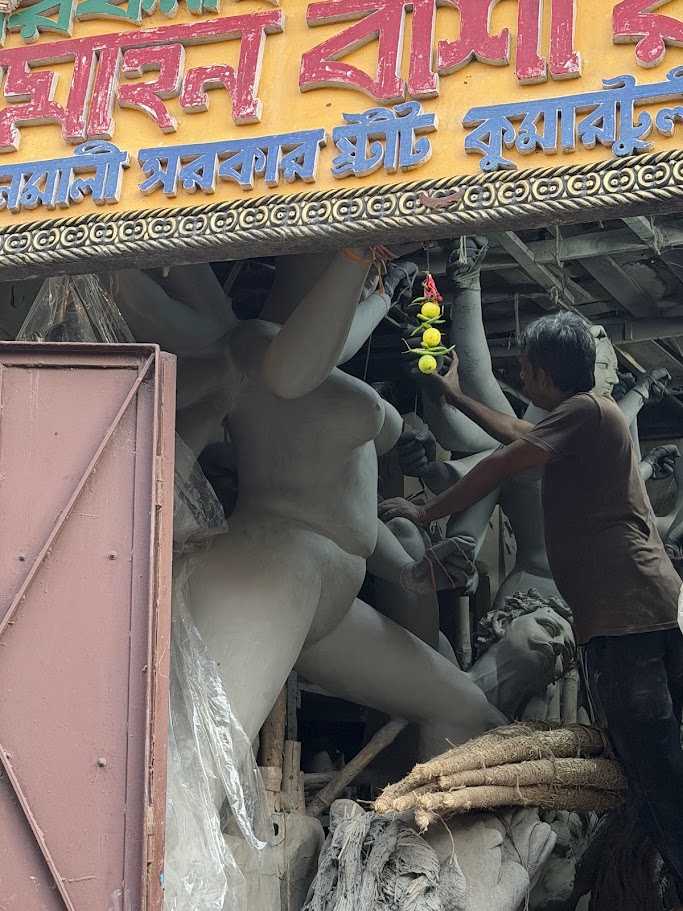
The process itself was mesmerizing. Artisans skillfully transformed simple materials into works of art, layering clay gathered from the banks of the Hooghly River over carefully constructed straw armatures. Every movement seemed deliberate and practiced, reflecting generations of knowledge passed down through families. Watching these craftsmen work reminded me that art is not only about the finished product but also about the stories, traditions, and human connections embedded in the creative process.
The sensory experience was incredible. The workshop spaces buzzed with activity as artists shaped clay, sculpted hands, and painted delicate features. The scent of wet earth mingled with the sounds of conversation, tools scraping against clay, and the hum of daily life. Everywhere I looked, there was beauty in the making. It was impossible not to feel inspired by the dedication and artistry surrounding me.
As an art educator, I was especially struck by the combination of technical skill and cultural significance. These idols are not simply sculptures; they are powerful symbols of faith, community, and celebration. Knowing that many of the pieces I saw would soon become the centerpieces of festivals attended by thousands of people gave the experience even greater meaning.
Kumartuli offered a powerful reminder that art can connect people across generations and cultures. It is a place where tradition remains vibrant, where creativity is woven into everyday life, and where humble materials are transformed into something extraordinary. Long after I leave Kolkata, I know I will remember the sights, sounds, and artistry of Kumartuli and the talented craftsmen who continue this remarkable legacy.
For anyone visiting Kolkata, Kumartuli is more than a destination. It is an opportunity to witness the heart of a centuries-old artistic tradition and to see firsthand how creativity, faith, and community come together to create something truly magical.


Leave a Reply